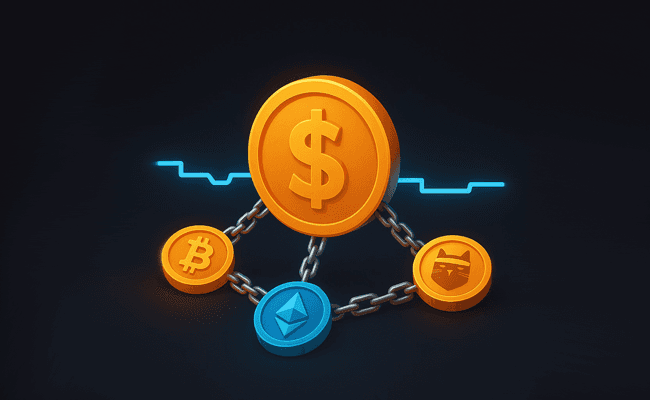
Imagine you’re carrying a treasure chest full of gems, but every time you open it, the gems change shape. One day they’re worth a fortune, the next day only half as much. That’s what regular cryptocurrencies can feel like—valuable but unpredictable. Now imagine a chest where each coin always equals exactly one dollar. That’s the magic of a stablecoin.
Stablecoins are digital currencies designed to stay steady in value, giving you the best of both worlds: the speed of crypto and the reliability of traditional money.
Now, let’s break it down!
What Is a Stablecoin?
A stablecoin is a type of cryptocurrency that’s pegged (or tied) to something stable—usually a real-world currency like the US dollar or euro. For example, 1 USDT (Tether) or 1 USDC (USD Coin) always aims to equal $1. This means when markets swing wildly, stablecoins hold steady, like a calm harbor during a storm.
How Do Stablecoins Work?
There are a few ways stablecoins keep their value:
1. Fiat-Backed: For every stablecoin issued, a dollar (or other asset) is held in reserve. Think of it as a vault full of dollars backing each digital coin.
2. Crypto-Backed: Some stablecoins are supported by other cryptocurrencies. They’re “overcollateralized,” meaning more value is locked than the stablecoin itself.
3. Algorithmic: These use smart contracts and algorithms to adjust supply automatically, keeping the price stable without physical reserves.
Each method has strengths and risks, but the goal is the same: keep the coin steady.
Why Do Stablecoins Matter?
Stablecoins are a vital tool in the crypto world because they solve the problem of volatility.
• Payments: You can pay for goods or services without worrying if your money will change value overnight.
• Trading: Traders use stablecoins to move in and out of positions quickly, without leaving crypto.
• Savings & Lending: Earn interest in stablecoins without the rollercoaster of volatile tokens.
• Global Access: People in countries with unstable currencies can use stablecoins for everyday transactions.
They’re like a reliable anchor in a sea of fluctuating coins.
Real-Life Examples
• USDT (Tether): The oldest and largest stablecoin, widely used across exchanges.
• USDC (USD Coin): A popular fiat-backed stablecoin, praised for transparency.
• DAI: A crypto-backed stablecoin run by MakerDAO, decentralized and community-governed.
The Challenges
Not all stablecoins are created equal. If reserves aren’t managed properly, they can lose their peg. In fact, some algorithmic stablecoins have collapsed when their systems failed. That’s why transparency and trust are critical.
Fun Fact
Stablecoins are so widely used that in 2022, Tether (USDT) often had more daily transaction volume than Bitcoin itself. More people were using it to move money than almost any other crypto! And there you go! Now you know what stablecoins are, how they work, and why they’re the steady anchors of the crypto world.