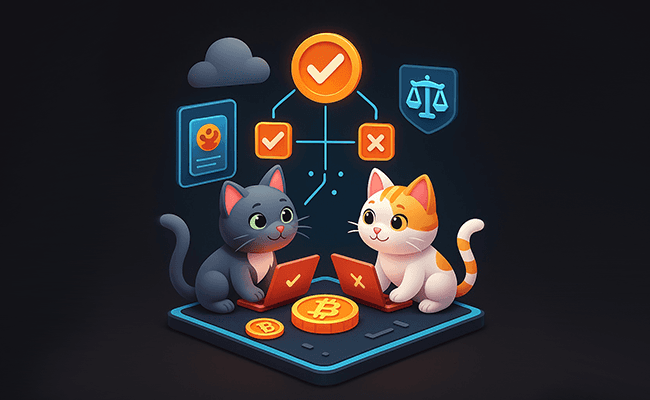
Imagine a guild of adventurers setting off on a quest. Instead of one leader making all the decisions, every member gets a vote—where to travel, how to spend the loot, and what monsters to fight next. That’s how a DAO works in the world of crypto.
A DAO is like a digital guild or community where decisions are made collectively. Instead of a boss calling the shots, the rules are written in code, and everyone with a token has a voice.
What Is a DAO?
DAO stands for Decentralized Autonomous Organization. It’s a community that uses blockchain to make decisions together. Instead of managers and CEOs, DAOs use smart contracts and tokens:
• Smart contracts act like the rulebook, automating what happens when members vote.
• Tokens act like voting power—you use them to propose and decide on changes.
In short, DAOs let people run projects, businesses, or even games as equals.
How Do DAOs Work?
1. Setup: A group creates a DAO and defines the rules in smart contracts.
2. Membership: People join by holding the DAO’s tokens.
3. Proposals: Members suggest new ideas, like funding a project or changing rules.
4. Voting: Token holders vote, and the smart contract executes the decision automatically.
It’s like town hall meetings—only digital, global, and powered by blockchain.
Why Do DAOs Matter?
DAOs give power back to communities. Instead of relying on one central authority, decisions are shared.
Benefits of DAOs include:
• Transparency: Everyone can see the rules and the votes.
• Global Collaboration: People from anywhere can work together.
• Shared Ownership: Members feel invested in the project’s success.
Real-Life Examples
• MakerDAO: Governs a stablecoin called DAI. Members vote on interest rates and policies.
• Uniswap DAO: Lets token holders decide how a massive crypto exchange evolves.
• DAO Collectives: Groups of investors pool funds to buy NFTs, art, or even real-world assets.
The Challenges
DAOs aren’t perfect. Sometimes only a few “whales” (big token holders) have most of the voting power. Also, rules written in code can’t cover every real-world situation, so disagreements still happen. And since DAOs are global, laws about them aren’t always clear—raising questions about taxes, accountability, and legality.
Fun Fact
One of the earliest DAOs, simply called “The DAO,” launched in 2016 and raised over $150 million. Unfortunately, it was hacked, leading to one of the most famous events in Ethereum’s history—and proving both the promise and the risk of community-run projects.