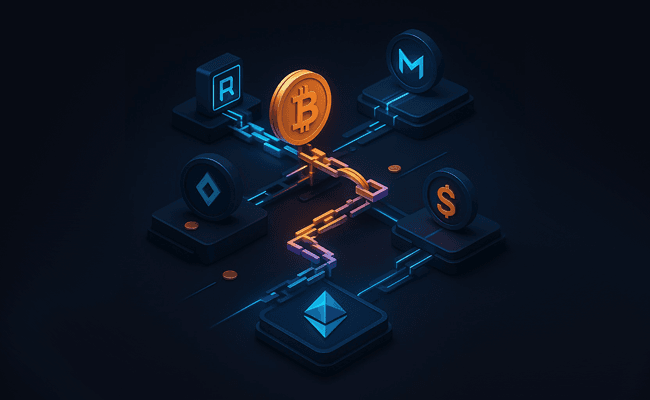
Imagine you live on an island full of treasure. It’s nice, but you’ve heard that other islands have even more treasure—and maybe tools, gems, or magical items you can’t get at home. The problem? There are no bridges, no boats, and no tunnels. You’re stuck. That’s how blockchains used to be: isolated islands. Each one had its own rules, tokens, and treasures, but they couldn’t talk to each other. Then came multi-chain technology, which builds the bridges that connect these islands into one big world.
What Is a Multi-Chain Future?
A multi-chain future means a world where blockchains don’t exist separately but connect with each other. Instead of Bitcoin, Ethereum, Solana, or other chains being locked away in their own ecosystems, multi-chain tools allow assets, apps, and information to move freely across them. Think of it as turning dozens of isolated villages into a bustling trade network. Now merchants (apps), travelers (users), and treasure (tokens) can move between places easily.
How Does Multi-Chain Technology Work?
The key to multi-chain is the creation of bridges—special systems that let tokens or information travel between blockchains.
Here’s a simple example:
• You have 1 Bitcoin, but you want to use it on the Ethereum network.
• A bridge “locks” your Bitcoin on the Bitcoin blockchain.
• Then it creates a “wrapped” version of that Bitcoin (called wBTC) on Ethereum.
• Now you can use your Bitcoin in Ethereum apps like DeFi lending or NFT markets.
When you’re done, you can send wBTC back, and the bridge will unlock your original Bitcoin.
It’s like leaving your treasure chest at the dock on one island and getting a magical copy of it on the next island to use there.
Why Does Multi-Chain Matter?
Blockchains each have strengths and weaknesses. Some are faster, some are more secure, some are cheaper. By connecting them:
• More Possibilities: Users can take advantage of different features across blockchains.
• Bigger Ecosystem: Apps and tokens reach more people by being cross-chain.
• Better Innovation: Developers build tools that work everywhere, not just on one chain.
Instead of choosing one island, you get access to the whole archipelago.
Real-Life Uses of Multi-Chain
• Cross-Chain DeFi: Borrow on Ethereum, repay on Solana, earn interest on Avalanche.
• NFT Transfers: Move NFTs between blockchains to use them in games, marketplaces, or metaverses.
• Payments: Send money across borders using the fastest or cheapest chain at the time.
The Challenges
Bridges aren’t perfect. Because they move so much value, they can be targets for hackers. Some bridges have been attacked and lost hundreds of millions of dollars in crypto. Developers are working on safer versions, but users need to be careful. Also, not all chains connect smoothly yet. Think of it as building bridges between islands—some are sturdy, some are still shaky.
Fun Fact
The first popular blockchain bridge was Wrapped Bitcoin (wBTC), launched in 2019. Today, billions of dollars’ worth of Bitcoin live on Ethereum as wrapped tokens—proof that people want their treasures to move across islands. And there you go! Now you know what a multi-chain future is, how bridges work, and why they matter.